America owes a debt of gratitude to thousands of heroic people who served their nation faithfully in our struggle for Independence.
Most people could tell you a little bit about men like George Washington, Benjamin Franklin, or Thomas Jefferson.
But today I bring you the story of a man who is much lesser known, yet played a crucial role in the success of the Continental Army. He was an ordinary man who did extraordinary things.
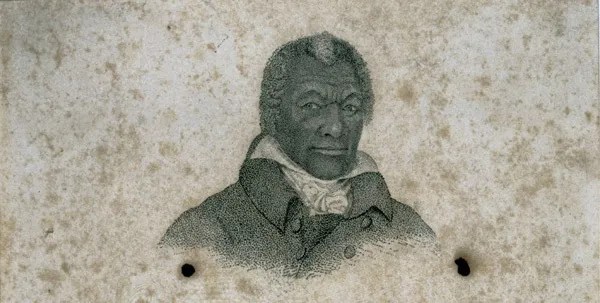
Not much is known about James Armistead’s early life. Even his year of birth is quite debatable. Some sources cite his birth as having been around 1748, while others claim a date closer to 1760. Regardless, one thing we do know for certain is that he was the slave of a man named William Armistead, whose plantation was located in New Kent County, VA.
In 1781, James decided that he desperately wanted to join the Continental Army. His master agreed to let him, on the condition that he would return to the plantation after the war ended.
James was initially assigned to serve as a servant under the Marquis de Lafayette. He knew, however, that he would be much better suited for a different type of role.
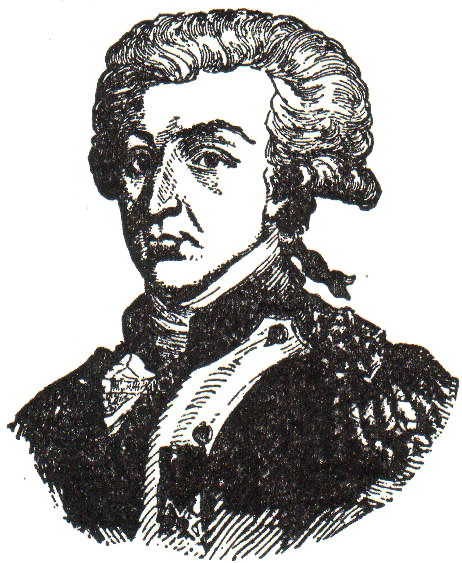
At the start of the war, the British governor of Virginia, John Murray, had made a proclamation emancipating any slaves who joined the British military. Some slaves took them up on this offer, and James believed that he would successfully be able to cross British lines and pose as a runaway looking to join the British ranks.
Lafayette agreed to the plan, and James set out on his new mission.
Not only did James manage to convince them that he was a runaway wanting to join their army, but General Cornwallis appointed him to serve as a servant in his quarters. This gave him the opportunity to overhear important strategy meetings between Cornwallis and his officers, and even view maps of the plans they were working on.
It was dangerous work. One mistake and he would be hanging from the end of a rope. But James knew the importance of his job. It would offer the Patriot army a chance to know what the British were thinking before their plans turned into actions.
As his time “serving” under General Cornwallis grew longer, he gained much trust from the British officers he interacted with. So much trust, in fact, that he convinced them that he was willing to spy on the Patriots for them. They accepted his offer, and James Armistead became a double agent.
He fed the British false information regarding the Continental Army, all while feeding good information to Lafayette. It was through his work that the Continental Army was able to claim victory at Yorktown.
As the war came to an end, James was faced with the reality that he had to return to his master’s plantation. He was hopeful that his freedom would be given him in 1783, when Congress passed an act granting freedom to all enslaved individuals who took arms for their country during the war. However, freedom was denied him by one small technicality. He had been a spy, not a soldier.
James Armistead would not gain his freedom for another three years, when Lafayette petitioned Congress on his behalf. Upon becoming a free man, James took the surname “Lafayette” to honor the man who had helped secure his freedom.
Records would later show that he shortened the name to simply “Fayette”.
As we celebrate our Semiquincentennial, let’s remember the many incredible patriots who risked everything in faithful service to our country.
A. M. Watson
Hebrews 13:8
 Seeking The Timeless Anchor
Wow! That is an awesome story. What a brave man. There are so many unsung heroes that I am grateful for!
LikeLike